Beta Blockers: Effective Antihypertensive Drugs
Beta blockers are also known as β-adrenergic receptor antagonists or blockers. They are effective antihypertensive drugs used to treat hypertension, anxiety, cardiac arrhythmia (irregular heartbeat) and other associated cardiovascular conditions. This document gives a brief information on mechanism of action, therapeutic use, precautions or contraindications and side effects of beta-blockers. Understanding of these aspects will be helpful […]
The Role of Public Health Policies in Controlling Non-Communicable Diseases

Non-communicable diseases (NCDs) such as heart disease, diabetes, and cancer are major health challenges worldwide. Unlike infectious diseases these diseases are caused by a combination of the following; lifestyle, environmental and genetic factors. With an increasing global burden of NCDs, the presence of public health policies is essential in curbing the epidemic, as well as […]
Amlodipine besylate
Amlodipine besylate is a common calcium channel blocker (CCB) that is mostly used to treat high blood pressure and chronic stable angina (chest discomfort). It is a calcium antagonist and belongs to the dihydropyridine class, which means it relaxes blood vessels and makes blood flow better. It was approved for medical use in 1990 and […]
Calcium Channel Blockers (CCBs)
Calcium channel blockers are a type of antihypertensive medicine that stops calcium ions from getting into cardiac and smooth muscle cells. This causes blood vessels to widen, the heart rhythm to slow down, and blood pressure to drop. They are often used to treat high blood pressure, chest pain, and some types of arrhythmias. Calcium […]
Classification of Antihypertensive drugs
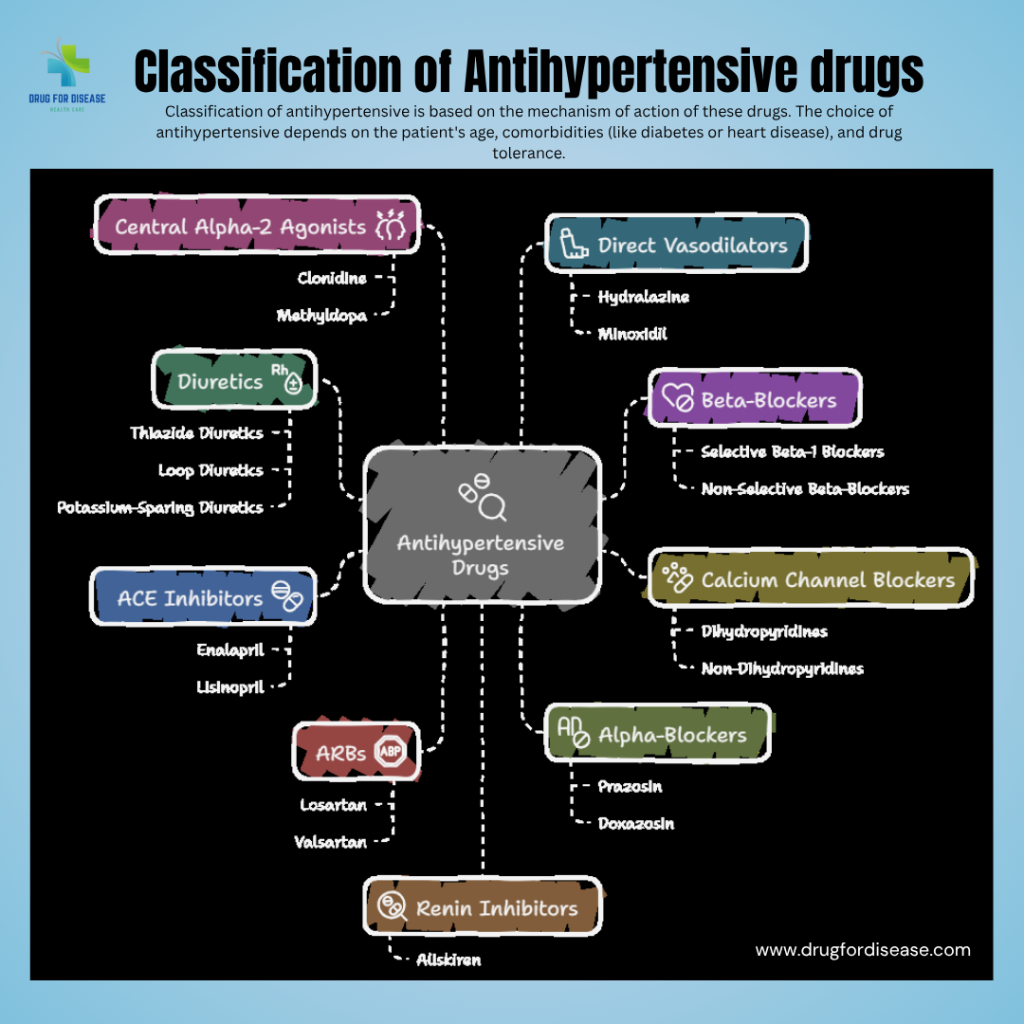
Antihypertensive drugs are medicines that help to lower high blood pressure (hypertension). They employ diverse physiological approaches to control blood pressure and reduce the chances of complications such as heart attacks, strokes, and effects on kidney. Classification of antihypertensive is based on the mechanism of action of these drugs. groups are as follow 1. Diuretics; […]
What Are Non-Communicable Diseases (NCDs)?
Non-communicable diseases are a group of medical conditions that are not transmitted from person to person. Rather, they come about due to the course of time and are often a result of poor eating habits, insufficient physical activities, use of tobacco, and the intake of alcohol in amounts that are beyond normal. These are the […]